
 +86 18020288563


Today, the company has become one of the leading manufacturers of screening machines. Its products, particularly the flagship AGR gyratory screen, are acknowledged by customers as the "Mercedes" among screening equipment.
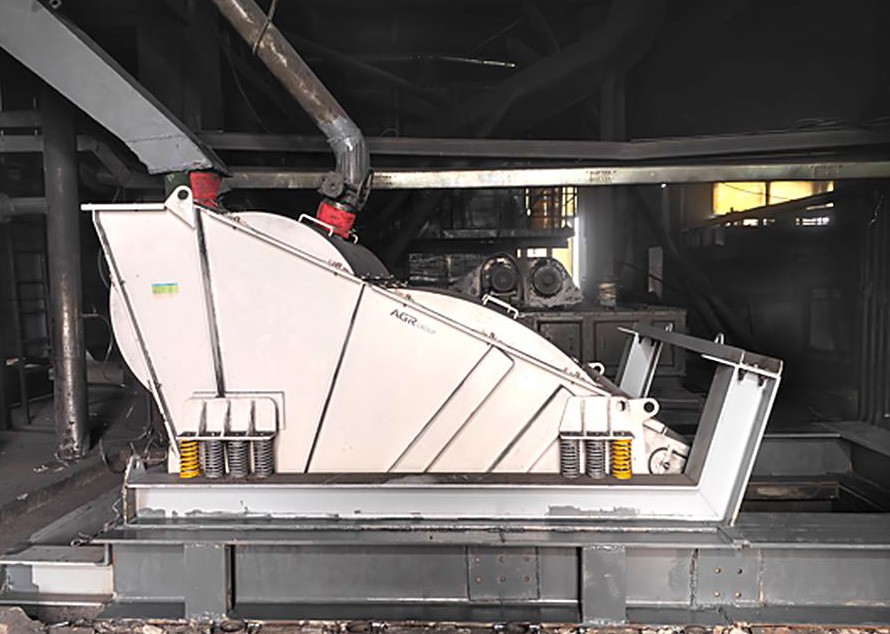
The AGR gyratory screen is by far the most effective screening machine that replicates the motions and procedures of manual hand sieving. Its unique structural design integrates the horizontal circular "sifting" motion and vertical upward-and-downward "tossing" motion of manual screening. Equipped with independently adjustable rotating speed, eccentricity, radial angle, tangential angle and discharge opening size, it is applicable to screening nearly all types of materials. A full range of screen mesh cleaning systems ensures the continuous and high-efficiency operation of the machine.

In the past, requirements for particle size classification were relatively low, so simple screening to remove agglomerated large particles was sufficient. In recent years, however, market standards for particle grading have grown increasingly stringent, leading to wider adoption of AGR gyratory screens across diverse industries.
Reasons Why Quality Assurance Wins Customer Favor
Particle size classification via screening works by repeatedly comparing material particles against screen openings: fine particles pass through while coarse ones are retained. Irregular particle shapes and wire mesh resistance hinder passage, meaning not all small particles will necessarily sift through. Screening is therefore a probabilistic process. The throughput and precision of a screening machine depend on how many times particles interact with screen openings per unit area per unit time, as well as their likelihood of passing through.
High-frequency vibrating screens and rotary vibrating screens operate at 700–1500 revolutions per minute. Their vertical acceleration exceeds gravitational acceleration g across most of the screen surface, causing particles to lift off the mesh, follow a free parabolic trajectory, and fall back down. During airborne movement, particles cannot interact with screen openings. When landing, small particles can only pass through by pure chance, much like a long-distance basketball shot swishing through the hoop; otherwise, they bounce away. Both factors drastically reduce the probability of particle penetration.
By contrast, AGR gyratory screens run at a low frequency of 180–260 revolutions per minute. Vertical acceleration only surpasses g near the outermost edge of the screen deck. Materials in the central area never separate from the mesh, enabling constant particle-to-opening contact. Unlike particles on high-frequency screens that behave like long basketball shots, particles on AGR gyratory screens rest right at the edge of the "hoop". As long as their center of gravity aligns with an opening, they pass through with zero risk of bouncing back. The far greater number of particle-screen interactions and higher penetration probability drastically boost specific screening capacity and classification precision per unit area.
Many particles are polygonal crystals or spheres. Their shapes not only make screening harder but also cause them to wedge into mesh apertures and block screens entirely. Unobstructed mesh openings are essential for continuous industrial screening, so screen cleaning systems are mandatory. Engineers at Germany’s AGR pioneered the integration of ultrasonic technology into screening processes, developing and commercializing ultrasonic screen mesh cleaning systems that enable efficient separation of ultra-fine particles.

AGR gyratory screens feature excellent sealing performance. Manufacturers can blow dry air or inert shielding gas into the screen chamber to protect product quality from external environmental factors such as ambient humidity and temperature during screening.
AGR gyratory screens can be configured with up to five screen decks. A single unit can replace multiple screening machines on one production line to produce a wide range of product grades. This design cuts floor space occupation and improves overall line reliability. One customer replaced three conventional screening machines with just one AGR gyratory screen during a technical upgrade.
As awareness of environmental protection and occupational health rises, noise emission standards have become increasingly stringent. The low-noise operation of AGR gyratory screens perfectly meets today’s industry requirements.




 +86 18020288563


